English
 русский
 Español

Dental Floss Sticks: Types, Benefits & How to Use Them Correctly
Контент
- 1 What Are Dental Floss Sticks and Why Are They Worth Using
- 2 How Dental Floss Sticks Work: The Mechanics of Interproximal Cleaning
- 3 Types of Dental Floss Sticks: A Complete Breakdown
- 4 Dental Floss Sticks vs. Traditional Floss vs. Interdental Brushes
- 5 How to Use Dental Floss Sticks Correctly: Step-by-Step Technique
- 6 Dental Floss Sticks for Special Populations and Clinical Situations
- 7 The Clinical Evidence: Do Dental Floss Sticks Actually Work?
- 8 Choosing the Right Dental Floss Stick: A Practical Guide
- 9 Market Trends: What's Driving Growth in the Dental Floss Stick Segment
What Are Dental Floss Sticks and Why Are They Worth Using
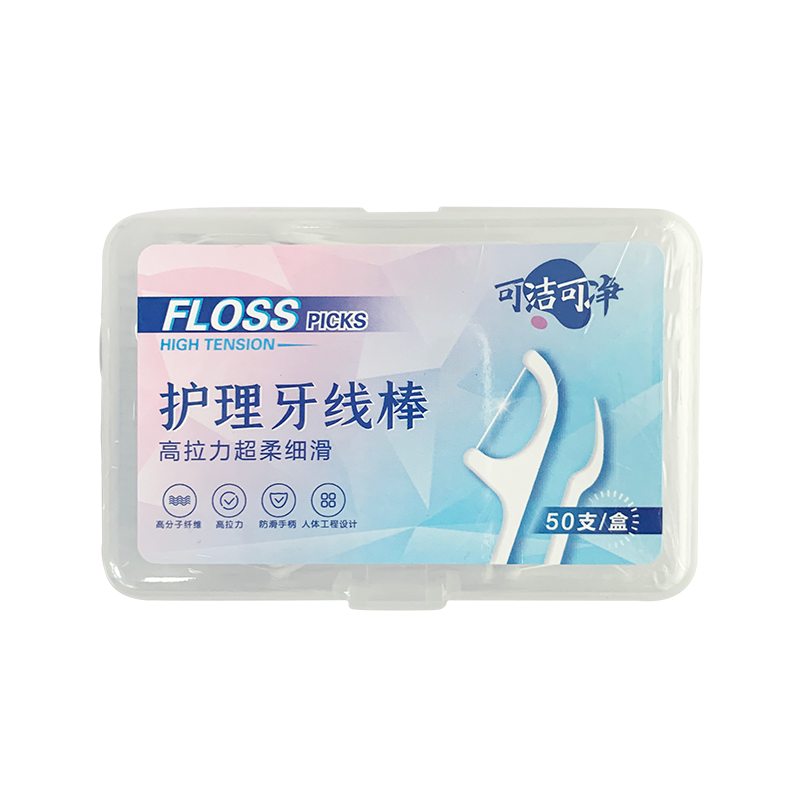
Dental floss sticks — also called floss picks or flossers — are single-use or reusable oral hygiene tools that hold a short strand of dental floss taut between two prongs mounted on a plastic or biodegradable handle. They perform the same fundamental function as traditional spool floss: removing dental plaque and food debris from the interproximal spaces (the areas between teeth) that a toothbrush cannot reach. The difference is that they do it with one hand, without the awkward finger-wrapping technique that many people never master — and that barrier has made dental floss sticks one of the fastest-growing segments in the global oral care market.
The global dental floss market was valued at approximately USD 780 million in 2023, with floss sticks and picks representing the fastest-growing sub-category, driven by convenience, ease of use among children and elderly users, and growing oral health awareness in developing markets. Dentists and dental hygienists consistently recommend that their patients use floss sticks if the alternative is not flossing at all — acknowledging that the best flossing tool is the one a person will actually use consistently.
How Dental Floss Sticks Work: The Mechanics of Interproximal Cleaning
Effective interproximal cleaning requires the floss to be guided below the gum line — into the sulcus, the shallow groove between the tooth and the gum tissue — and then swept upward against the tooth surface to dislodge the biofilm (plaque) that accumulates there. This biofilm is the primary precursor to gingivitis, periodontal disease, and interproximal cavities, which account for a significant proportion of all dental decay in adults.
A dental floss stick holds the floss segment under tension between its two tines, allowing it to be guided between teeth and under the gum line using a single-handed sawing motion. The handle gives the user leverage and control that loose floss wound around fingers does not — particularly for reaching posterior teeth (molars and premolars) at the back of the mouth, where traditional flossing is most difficult and where decay most commonly develops.
The key limitation compared to traditional floss is that the short, fixed floss segment cannot be advanced to expose a clean section between each tooth space — the same small piece of floss is used throughout the entire mouth. This means debris and bacteria from earlier spaces may be transferred to later ones if the floss is not rinsed between contacts. High-quality floss sticks with longer tine spans or textured floss segments partially address this by creating more surface area and reducing cross-contamination per contact.
Types of Dental Floss Sticks: A Complete Breakdown
The dental floss stick category has expanded significantly, with products now differentiated by floss type, handle design, intended user, and sustainability profile. Understanding the sub-types helps in selecting the right product for specific needs.
By Floss Filament Type
- Nylon multifilament floss sticks — The standard construction. Multiple nylon filaments twisted together create a floss that is strong, slightly textured, and effective at mechanical plaque removal. The multifilament construction allows the floss to fray slightly as it passes between teeth, increasing contact surface area. Available waxed (easier to slide through tight contacts) and unwaxed (some clinicians argue better plaque pickup).
- PTFE (polytetrafluoroethylene) monofilament floss sticks — A single-strand PTFE fiber that slides smoothly between tight contacts without shredding or breaking. Preferred for patients with closely spaced teeth, dental restorations, or orthodontic wires. More expensive than nylon but significantly more consistent in performance. PTFE floss is essentially the same material as Gore-Tex.
- Expanded PTFE (ePTFE) floss sticks — An expanded, sponge-like PTFE structure that is exceptionally soft, shred-resistant, and comfortable. The expansion creates a micro-textured surface with excellent plaque-removing properties. Common in premium floss stick products marketed for sensitive gums.
- Waxed floss sticks — Any of the above filament types coated with a thin layer of wax (typically carnauba or microcrystalline wax) to ease passage through tight contacts and reduce snap-through trauma to the gums. The wax coating does not reduce cleaning effectiveness — studies show equivalent plaque removal between waxed and unwaxed floss when technique is controlled.
- Flavored floss sticks — Mint, cinnamon, or bubblegum (children's) flavoring applied to the floss or handle improves user compliance, particularly for children and adolescents. The flavoring has no clinical cleaning benefit but meaningfully increases the likelihood that users — especially children — will floss consistently.
By Handle and Tine Design
- Standard F-shaped flossers — The most common format worldwide. An F-shaped or Y-shaped handle with two tines holding floss across the opening. Compact, economical, and suitable for all tooth positions. The Y-shape variant is specifically ergonomically optimized for posterior (back) teeth access.
- Long-handle floss sticks — Extended handles (typically 12–15 cm) designed for improved reach to posterior teeth, particularly useful for users with limited hand dexterity, those with braces, and caregivers flossing children's or elderly patients' teeth.
- Floss stick with toothpick — A dual-function design with a floss section on one end and a pointed toothpick on the other. The toothpick end handles larger food debris; the floss end addresses plaque. Extremely popular in Asia as an on-the-go convenience format.
- Children's floss sticks — Smaller tine spans (calibrated for narrower pediatric interproximal spaces), shorter handles with wider grips for small hands, and bright colors or character designs that encourage children to incorporate flossing into their daily routine from an early age.
- Refillable/reusable floss sticks — A growing premium segment in response to sustainability concerns. The handle is designed for multiple uses; only the floss thread is replaced. Reduces plastic waste per flossing session by approximately 80% compared to single-use equivalents.
By Sustainability Profile
- Conventional plastic handle floss sticks — Polypropylene or ABS plastic handles. Durable and low-cost but non-biodegradable. Represent the large majority of market volume.
- Biodegradable / compostable floss sticks — Handles made from PLA (polylactic acid, corn-derived), bamboo fiber composites, or wheat straw. The floss itself remains the sustainability challenge — nylon and PTFE are not biodegradable. Products with natural silk floss and plant-based handles are available in the premium eco segment but at a significant cost premium.
- Recycled plastic handles — Handles manufactured from post-consumer recycled polypropylene, offering a lower carbon footprint without compromising the familiar material properties of standard plastic handles.
Dental Floss Sticks vs. Traditional Floss vs. Interdental Brushes
Each interproximal cleaning tool has a distinct performance profile. The clinical evidence does not unanimously favor one over another — the most important factor is consistent daily use, regardless of which tool achieves it.
| Factor | Dental Floss Sticks | Traditional Spool Floss | Interdental Brushes |
|---|---|---|---|
| Ease of use | High (one hand) | Moderate (two-hand technique) | High (brush action) |
| Plaque removal efficacy | Good | Good–Excellent | Excellent (wider spaces) |
| Access to tight contacts | Good | Excellent | Poor (too wide) |
| Suitable for wider spaces / gum recession | Moderate | Moderate | Excellent |
| Cost per use | Low–Mid | Very Low | Low (reusable) |
| Portability / on-the-go use | Excellent | Good | Good |
| Environmental impact | Higher (single-use plastic) | Moderate | Lower (reusable) |
| Suitable for braces / implants | Limited | With threader | Good |
The clinical consensus from systematic reviews — including a 2019 Cochrane Review on interdental cleaning — is that interdental brushes show slightly superior plaque removal and gingivitis reduction compared to floss in patients with widened interdental spaces (common in adults with some degree of gum recession). For patients with tight contacts and healthy gum architecture, traditional floss and floss sticks perform comparably. The most effective tool is the one the patient uses correctly and consistently every day.
How to Use Dental Floss Sticks Correctly: Step-by-Step Technique
Incorrect technique is the primary reason flossing — with any tool — fails to prevent gum disease and interproximal decay. Many people "snap" floss between teeth and pull it straight back out, which removes food debris but does not effectively disrupt the subgingival biofilm that causes periodontal disease. The correct technique takes only marginally longer and produces dramatically better outcomes.
- Hold the floss stick at a 45-degree angle to the tooth surface — not perpendicular. This angle allows the floss to slide under the gum line rather than stopping at it.
- Ease the floss gently between the teeth using a back-and-forth sawing motion rather than snapping it down. Snapping causes the floss to hit the gum tissue hard, potentially causing trauma and bleeding — particularly in users with inflamed gums.
- Slide the floss below the gum line — approximately 1–2 mm into the sulcus — on one tooth. You should feel gentle resistance, not pain. Pain during this step usually indicates inflamed gum tissue rather than incorrect technique; inflammation typically resolves with consistent daily flossing over 1–2 weeks.
- Curve the floss into a C-shape against one tooth and move it up and down against the tooth surface 2–3 times to scrape the plaque from the root surface. Then curve it against the adjacent tooth and repeat.
- Move to the next space and repeat. Rinse the floss head under water or in your mouth between spaces to remove debris and reduce transfer of bacteria between tooth spaces.
- Don't forget the back surface of the last molar on each side — this surface is often neglected and is a common site for cavity development.
- Discard after use (for single-use floss sticks). Reusing the same floss stick spreads bacteria from one area of the mouth to another and the floss segment degrades rapidly after first use, reducing its cleaning effectiveness.
The optimal sequence is to floss before brushing rather than after. Flossing first dislodges interproximal plaque and food debris into the mouth, where brushing then removes it along with fluoride distribution throughout the oral cavity. Flossing after brushing leaves dislodged debris in the mouth without the subsequent mechanical removal that brushing provides.
Dental Floss Sticks for Special Populations and Clinical Situations
Certain patient populations benefit particularly from floss sticks over traditional floss, and clinical situations where conventional flossing is impractical or impossible make floss sticks the practical default.
Children (Ages 3–12)
The American Academy of Pediatric Dentistry (AAPD) recommends that interproximal cleaning begin as soon as two adjacent teeth are touching — typically around age 2–3. Children lack the manual dexterity to use traditional floss effectively; floss sticks with child-appropriate handle ergonomics allow parents to floss a child's teeth easily, and allow older children (typically 8+) to begin flossing independently. Children's floss sticks with smaller tine spans (10–12 mm versus the standard 16–18 mm for adult products) are designed to fit pediatric dental arch dimensions without damaging developing gum tissue.
Elderly Users and Those with Limited Dexterity
Arthritis, tremor, and reduced fine motor control make the two-handed finger-wrapping technique of traditional flossing extremely difficult or impossible for many older adults. Floss sticks eliminate this barrier entirely — the rigid handle requires only gross grip, and the single-hand operation removes the coordination requirement of traditional flossing. Extended-handle floss sticks (15+ cm) further improve accessibility for users with limited wrist mobility. Studies of flossing compliance in elderly care home residents consistently show significantly higher flossing rates with floss sticks than with traditional floss across all levels of dexterity impairment.
Orthodontic Patients (Braces)
Traditional braces create a physical barrier between the floss and the area below the archwire — requiring a floss threader to pass floss under the wire before it can be used interproximally. Standard floss sticks cannot pass under orthodontic wires. However, orthodontic-specific floss sticks with a stiff, needle-like threader tip integrated into the handle allow the floss segment to be guided under the archwire without a separate threader. These products significantly reduce the time and frustration of flossing with braces and have been shown to improve compliance with interproximal cleaning among orthodontic patients.
Implant and Bridge Patients
Dental implants and fixed bridges require cleaning under the restoration — an area that neither a toothbrush nor a standard floss stick can access effectively. Interdental brushes, water flossers, or superfloss (which has a stiffened threader, spongy section, and regular floss section) are typically recommended for implant maintenance. Floss sticks can clean around implant crowns from the buccal and lingual sides but are not effective for cleaning the subgingival area around the implant fixture itself. Patients with implants should discuss their specific cleaning protocol with their dental provider rather than relying on standard consumer guidance.
The Clinical Evidence: Do Dental Floss Sticks Actually Work?
The clinical research on floss sticks versus traditional floss is more nuanced than consumer marketing suggests — and the conclusion is more nuanced than either camp typically acknowledges.
Multiple clinical studies comparing floss sticks to traditional floss have found equivalent plaque removal and gingivitis reduction when both are used with correct technique. A 2006 study in the Journal of Clinical Dentistry found no statistically significant difference in plaque index or gingival index between floss pick and traditional floss users after 12 weeks of supervised use. More recent research has confirmed this finding across different demographic groups.
The key variable is not the tool — it is technique and consistency. Studies that show inferior performance for floss sticks versus traditional floss typically reflect differences in technique quality rather than inherent tool limitations. When technique is controlled and standardized, performance is equivalent. The practical implication is significant: a patient who will use a floss stick daily with adequate technique achieves substantially better oral health outcomes than a patient who owns traditional floss but uses it irregularly or with poor technique.
The one area where traditional floss consistently outperforms floss sticks is in very tight interproximal contacts — spaces where a standard floss stick tine span cannot adequately C-curve the floss against both tooth surfaces simultaneously. In these cases, thin PTFE floss used with correct technique provides marginally superior subgingival access. This is a population-level nuance that applies to a subset of patients with specific dental anatomy, not a universal limitation of the floss stick category.
Choosing the Right Dental Floss Stick: A Practical Guide
With dozens of dental floss stick options available across price points, materials, and designs, the selection criteria below help narrow the choice to the product most likely to improve your specific situation.
For Tight Tooth Contacts
Select PTFE monofilament or ePTFE floss sticks — their smooth, strong construction slides between tight contacts without shredding or breaking, which is the primary failure mode of nylon multifilament floss in tight spaces. Waxed versions further ease passage. Avoid budget multifilament options, which commonly shred and leave fragments between teeth.
For Sensitive or Bleeding Gums
Bleeding gums during flossing usually indicate gingivitis — an inflammatory response to plaque accumulation — not that flossing is harmful. The bleeding typically resolves within 7–14 days of consistent daily flossing as gum health improves. Use soft, waxed floss sticks with a gentle technique during the initial period. If bleeding persists beyond two weeks of consistent correct flossing, a dental evaluation is warranted to rule out periodontitis or other conditions.
For Convenience and Portability
Standard F-shaped or Y-shaped plastic floss sticks in individual packets or small travel packs are the most practical format for carrying in a bag, car, or desk drawer. The Y-shaped variant is particularly recommended for users who struggle with posterior tooth access — its angled tines provide a more natural approach angle to molars and premolars.
For Environmental Concerns
Choose refillable floss sticks with replaceable floss thread as the primary sustainability measure. Handles made from bamboo composite or recycled plastic offer a lower environmental footprint than virgin polypropylene. Pure natural silk floss with a bamboo handle is the most eco-friendly option available but at a significantly higher price point and with different performance characteristics than synthetic floss.
For Children
Prioritize age-appropriate tine span, fun design, and mild flavor over technical specifications. A child's compliance with daily flossing matters infinitely more than the marginal performance difference between premium and standard materials. Choose products with colorful handles, bubble gum or mild mint flavoring, and a tine span matched to the child's age (smaller for younger children, transitioning to adult sizing around age 8–10).
Market Trends: What's Driving Growth in the Dental Floss Stick Segment
Several converging trends are reshaping the dental floss stick market and driving product innovation beyond the standard single-use plastic pick format.
Sustainability Pressure and Regulatory Response
Single-use plastic oral care items — including floss sticks — are under increasing regulatory pressure in Europe and a growing number of markets. The EU Single-Use Plastics Directive has already restricted several single-use plastic product categories and oral care items are within scope for future regulation. This pressure is accelerating investment in biodegradable handle materials, refillable systems, and natural floss alternatives. The premium eco-oral-care segment is growing at approximately 12% annually — roughly double the overall oral care growth rate — as consumers with strong sustainability values shift spending toward verified eco-alternatives.
Integration with Digital Oral Health Ecosystems
Smart toothbrush platforms — from Oral-B, Philips Sonicare, and several direct-to-consumer startups — are creating app-based oral health coaching ecosystems that track brushing behavior and increasingly prompt complementary interdental cleaning. Floss stick brands that integrate into these digital platforms (via app connectivity or branded product partnerships) gain exposure to health-conscious consumers who are already investing in their oral health routines. This intersection of physical product and digital health tracking is expected to accelerate over the next five years as oral microbiome monitoring tools reach consumer markets.
Oral Health Awareness in Emerging Markets
Growing middle classes in Southeast Asia, Latin America, and Africa are driving rapid adoption of preventive oral hygiene products beyond toothbrushes and toothpaste. Dental floss sticks — positioned as convenient, hygienic, and accessible — are growing particularly fast in markets where traditional dental floss use has historically been negligible. China, India, Brazil, and Indonesia represent the four fastest-growing floss stick markets globally, with compound annual growth rates exceeding 15% in several. The floss stick's one-hand convenience and perceived modernity make it the preferred format for first-time interdental cleaner users in these markets, creating significant volume growth potential for manufacturers with regional distribution reach.